Sign in. It’s quick, free and it’s up to you.
An account is an optional way to support the work we do. Find out more.
Sign in. It’s quick, free and it’s up to you.
An account is an optional way to support the work we do. Find out more.
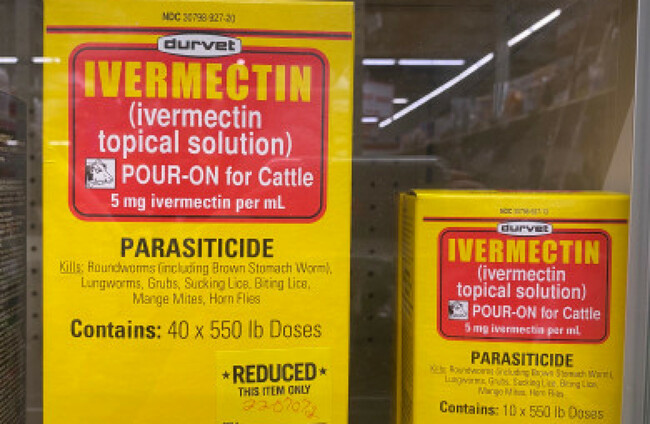
SEIZURES OF FALSE Covid “cure” medication Ivermectin have dipped over the last six months as the phenomenon appears to be winding down, new figures obtained by TheJournal show.
The Health Products Regulatory Authority (HPRA) seized just under 40,000 doses of the anti-parasite medication since August last year.
In a statement to The Journal, the HPRA confirmed that it had seized 39,275 units of ivermectin between August 2021 and June 2022. Figures were not yet available for July of this year.
Last year, we reported that 4,958 units of the medication were seized between July 2020 and July 2021.
That represented an increase of over 3,000 per cent on the previous 12 months when just 158 units were seized.
In the 11 months covered by these latest figures, the rate of seizures was highest last September – a time when many Covid public health measures were still in place. 8,605 units of the drug were detained that month.
There were also a very high number of seizures in November of last year – at 6,760.
In January of this year – the month that almost all pandemic restrictions were lifted – the figure was 5,577.
Seizures – while still very high compared to pre-pandemic figures – have dropped off since then with just over 1,000 units seized in May and June of this year.
The misuse of the drug gained notoriety at the height of the pandemic after some figures wrongly stated that it was a “cure” for the virus.
The breakdown of the seizures of the drug by the HPRA since 2019 are as follows;
2021
2022
Ivermectin is an anti-parasitic drug usually used to treat farm animals who develop bugs and ticks.
However, there is a human version of the drug which is used to treat people who develop parasitic worms, for example.
The advice from the HSE over the use of ivermectin has remained the same.
A HSE spokesperson said:
“Ivermectin is not an approved treatment for Covid-19 in Ireland or anywhere and while small studies have been done, none suggested that this agent will have any benefit.
There is no specific treatment for Covid-19. But many of the symptoms of Covid-19 can be treated at home.
The US Food and Drug Administration has previously said that it received “multiple reports of patients who have required medical attention, including hospitalisation, after self-medicating with ivermectin intended for livestock”.
Despite the various warnings, members of the public have still been attempting to buy it. The National Poisons Information Centre (NPIC) also confirmed that several people had poisoned themselves by taking the drug in a bid to cure Covid. While it did not state the exact number of people, the NPIC said it was fewer than five.
Latest study
One of the latest studies published in relation to Ivermectin use and Covid appeared in the New England Journal of Medicine and was published in May of this year.
In it, a total of 3515 patients were randomly assigned to receive ivermectin (679 patients), placebo (679), or another intervention (2,157).
The report concluded: “Treatment with ivermectin did not result in a lower incidence of medical admission to a hospital due to progression of Covid-19.”
Despite the various studies and reports done on ivermectin and its ineffectiveness in treating the virus, people continue to be taken in by conspiracy theorists who have been hailing the drug as some sort of miracle.
Its supposed medicinal qualities have been heralded on some of the more clandestine of social media platforms such as Telegram and video sharing website Bitchute.
The discussion around ivermectin’s use has also been kept in the public sphere by high-profile media commentators such as Joe Rogan who regularly hosted anti-vax and Covid denial material on his popular podcast.
The HPRA said it works in close co-operation with gardaí and Revenue to combat the illegal supply of health products into and within Ireland.
It also co-operates and shares intelligence with other regulatory and law enforcement agencies worldwide to prevent the illegal manufacture, importation and distribution of medicines, medical devices, and cosmetics.

To embed this post, copy the code below on your site













have your say